
Start here
Residential installation begins with four planning ranges
The residential quote form offers $3,000–$5,000, $5,000–$7,000, $7,000–$9,000, or $10,000+. If your budget falls between two ranges, choose the closest one and include the amount in your project notes. HLI confirms the price after reviewing the property, access, design, and seasonal service.
- Who this is for
- Southern California homeowners comparing professional Christmas light installation options and deciding what level of design, coverage, and full-season service fits their property.
- Updated
- · 9 minute read
Section 01
Start with the four residential budgets
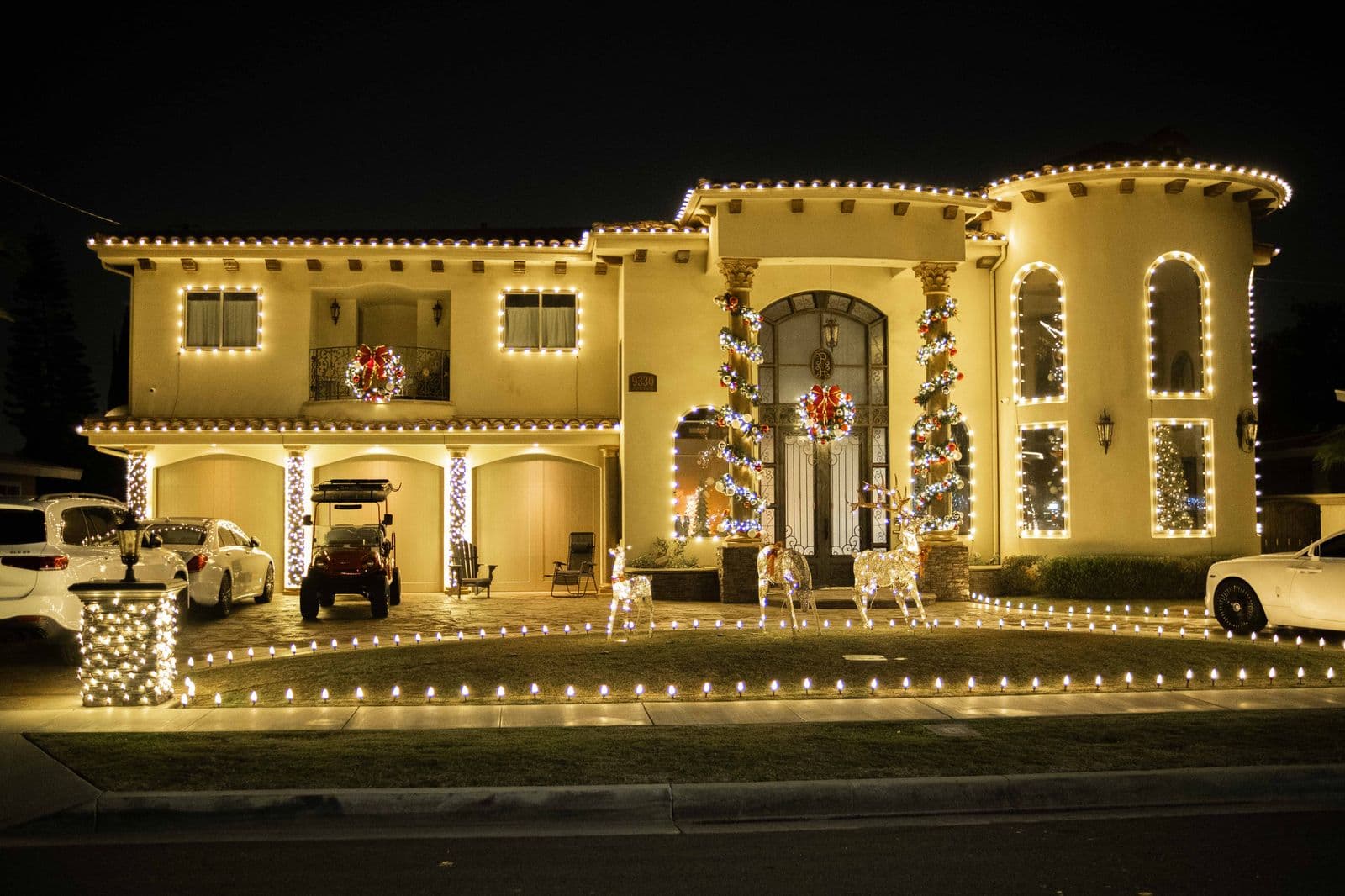
The most useful way to discuss residential pricing is to begin with the visual result and the amount of property coverage, not with a price per bulb. Two homes with similar square footage can create very different installation jobs. Roof height, roof shape, mature trees, landscape depth, access, window details, décor, and the number of viewing angles all affect the design and the work required to install it safely.
HLI uses four residential budget ranges to make the first conversation easier. Choose the amount you are comfortable spending, then share the parts of the home you want to highlight. Review the residential project gallery for examples, then find the local city guide for service details in your area.
These are planning ranges, not fixed packages. The final proposal describes the approved design for the actual property. A homeowner can begin near one level and adjust the coverage after seeing which architectural features and landscape zones will create the strongest overall result.
Section 02
What changes the price of a professional installation
Professional Christmas light installation includes more than placing lights along one edge of a home. A complete scope may combine design planning, materials, installation, in-season service, removal, and storage. The proposal changes when the property requires more labor, specialized access, additional display zones, or premium decorative elements.
Architecture and roof access
Multiple stories, steep or complex rooflines, turrets, dormers, balconies, long elevations, and limited equipment access can add time and change the installation method.
Trees and landscape coverage
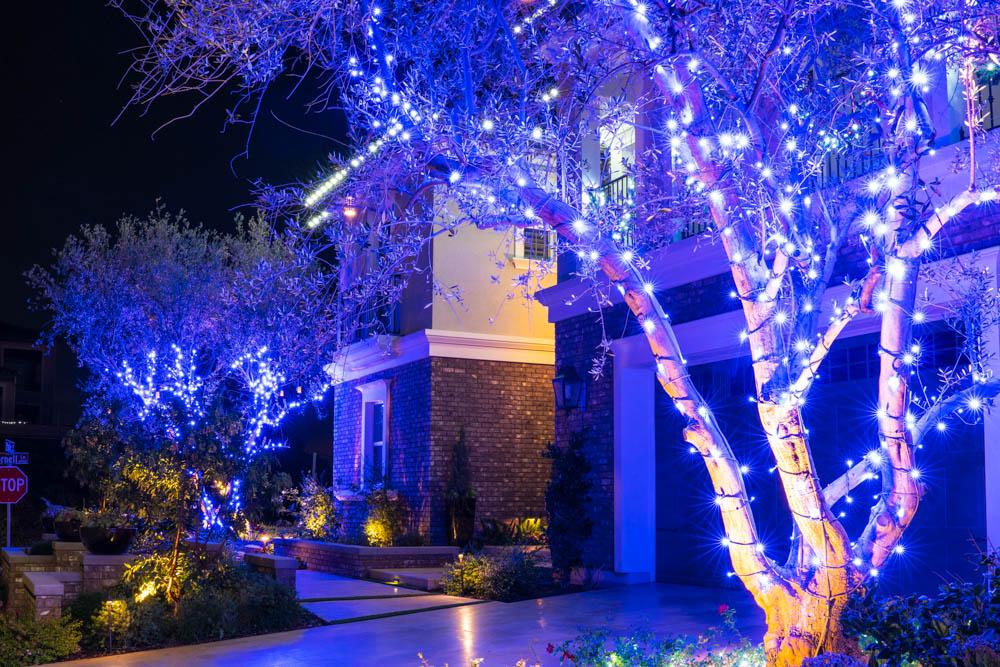
Trunks, canopies, palms, hedges, pathways, columns, and deep front yards create visual layers, but each additional zone requires material, layout, installation, and removal planning.
Windows, greenery, and décor
Window outlines, wreaths, garlands, bows, illuminated figures, premium décor, and statement pieces create a more finished display than roofline lighting alone.
Color and custom design
A consistent warm-white outline is usually simpler than a property-wide design with multiple colors, custom spacing, animated elements, themed décor, or detailed focal moments.
Service through the season
The scope should explain how display issues are reported and supported while the lights are active, rather than treating the installation date as the end of the relationship.
Removal and storage
Scheduled takedown, organized packing, labeling, transport, and off-season storage are part of a full-service plan and should be understood before the display is installed.
Section 03
Which parts of the property should I prioritize
For a focused display, start with a crisp roofline and choose one entry or landscape detail. The goal is a polished presentation with deliberate focal points instead of spreading the design too thin.
For a layered display, connect the house and landscape. Rooflines can be supported by windows, columns, trees, hedges, paths, or greenery at the entrance. This level often creates the strongest balance for a larger home because the display can be seen from the street and still feel detailed when guests approach the door.
A property-wide design can connect several views of a larger home. Large estates may need several architectural elevations, mature tree work, extended drives, gates, landscape zones, premium greenery, dimensional décor, and multiple focal moments. The design should still have a hierarchy. A larger budget works best when it creates a deliberate experience rather than adding unrelated elements everywhere.
Section 04
What to compare when reviewing two proposals
A lower total does not always represent the same service. Before comparing prices, confirm that each proposal describes the same areas, materials, installation responsibilities, service expectations, removal plan, and storage arrangement. One proposal may include only the initial installation while another covers the full season.
Ask which rooflines, windows, trees, landscape zones, greenery, and décor are included. Confirm whether the lights and decorative elements are supplied by the installer or the homeowner. Review how changes are approved, how service is requested, when removal occurs, and what happens to the materials after takedown. Clear scope is more valuable than a long product list that does not explain the finished design.
It is also useful to ask how the design responds to the home. A professional plan should identify the architectural features that deserve emphasis, the viewing angles that matter, and the places where restraint will make the main focal points stronger.
Section 05
How to prepare for a faster design conversation
Start with the property address, a few current photos, the preferred color direction, and the investment level that feels closest to your goal. Identify the rooflines, entry, trees, landscape, windows, and décor that matter most. If there is a neighborhood event, travel date, party, HOA review, gate restriction, or preferred installation window, mention it early.
Inspiration images are helpful when they communicate a feeling, but the final design should fit the actual architecture and landscape. Note what you like in each image, such as classic warm-white rooflines, colorful trees, premium greenery, or a dramatic entry, instead of expecting a different property to be copied exactly.
You do not need to make every decision before contacting HLI. A useful request gives the team enough context to recommend priorities, identify access questions, and determine whether the desired result fits your budget.
Buyer questions
Frequently asked questions
+What is HLI's residential project minimum?
HLI residential projects begin at $3,000. The first budget choice is $3,000–$5,000. HLI confirms pricing after reviewing the property, access, and design.
+What can I prioritize with a $3,000–$5,000 budget?
Tell HLI which part of the home matters most to you. A roofline, a front entrance, or a selected tree can give the team a clear starting point for the proposal.
+Can a residential Christmas display cost more than $25,000?
Yes. Large estates, extensive property coverage, mature tree work, premium décor, complex access, and highly customized displays can exceed $25,000 and require an individual scope.
+Are removal and storage included?
The proposal should state the exact removal and storage responsibilities. HLI can provide full-season service that includes scheduled takedown and organized storage when those items are part of the approved scope.
+When should I request a residential installation?
Request the project as early as practical. Earlier planning gives more room for design decisions, preferred installation timing, material preparation, access review, and any property or HOA coordination.
Research and references
Sources and further reading
These first-party and public-agency references support the planning, safety, access, and procurement guidance used in this resource.
- Holiday Light InstallationsHLI residential service and investment levelsAccessed August 7, 2026
- U.S. Consumer Product Safety CommissionSeasonal and decorative lighting productsAccessed August 7, 2026 Opens in a new tab
- U.S. Consumer Product Safety CommissionHoliday safety guidanceAccessed August 7, 2026 Opens in a new tab
- California Contractors State License BoardFinding and hiring the right contractorAccessed August 7, 2026 Opens in a new tab